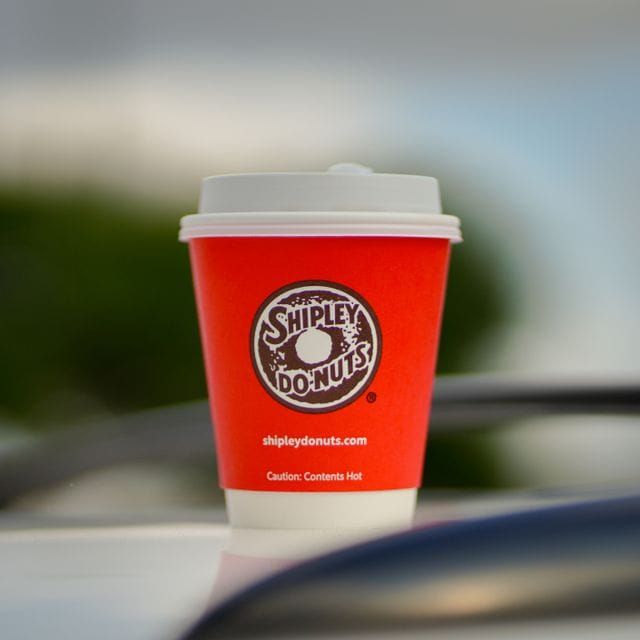
CAUTION: CONTENTS HOT
The Language
Somewhere on the side of nearly every disposable hot-beverage cup sold in the United States today, in small print, sits some version of a caution about heat. The exact wording drifts by chain and by decade: “Caution: Hot,” “Caution: Contents Hot,” “Caution: Contents May Be Extremely Hot.” Despite an extensive search of the documentary record for this piece, no dated specimen, trial exhibit, or packaging record was located that fixes the precise wording printed on the cup Stella Liebeck was holding in Albuquerque on February 27, 1992, or that pins down exactly what any given chain prints today.
One retrospective account states flatly that “the reason why coffee cups state this comes from the Liebeck v. McDonald’s Restaurants trial of 1994.” That is the popular claim this article exists to test against the record, not a citation for it. Treat it as folklore, not sourcing.
Plain-English Translation
Strip away the legal atmosphere and the three words do one job: they put a buyer on notice, at the point of sale, that the liquid inside can burn. No federal statute or regulation was located, in either direction, that specifies what a hot-beverage warning must say, how large it must be printed, where it must appear on a cup, or what temperature constitutes 'hot'. On the record available, this looks like a voluntary, manufacturer-set practice adopted for product-liability risk management, not compliance with any binding rule, though this research could not point to a specific regulatory citation confirming that no such rule exists, only that none was found. That gap matters: if nothing legally requires a hot-beverage warning to exist at all, then every company printing one is choosing to.
Before This Language Existed
Before the case that made this warning famous ever reached a jury, the practice it was arguing about was already well established and already generating a paper trail. McDonald’s corporate operations manual specified that coffee be held at 180-190°F at the franchise level. At that temperature, expert testimony introduced at trial indicated a third-degree burn could occur within a few seconds of skin contact. Sources in the record vary on the exact figure, from two seconds at 185°F to just under three seconds at 190°F, so no single precise number should be treated as settled.
McDonald’s was not encountering this for the first time in 1992. In the decade before Liebeck’s incident, the company had logged more than 700 reports of people burned by its coffee, and had paid out nearly three quarters of a million dollars settling those claims. At trial, the company’s own quality-assurance manager, Christopher Appleton, testified, as later reported, that this volume of complaints was “insufficient to cause the company to evaluate its practices.” (Yes, we're now very curious what permutation of complaint, settlement dollars, and any other risk measure provokes threshold.) Whatever else is contested about this case, that part is not: the company knew people were being burned, in volume, and had not changed its temperature policy before the case that would eventually force the question in front of a jury.