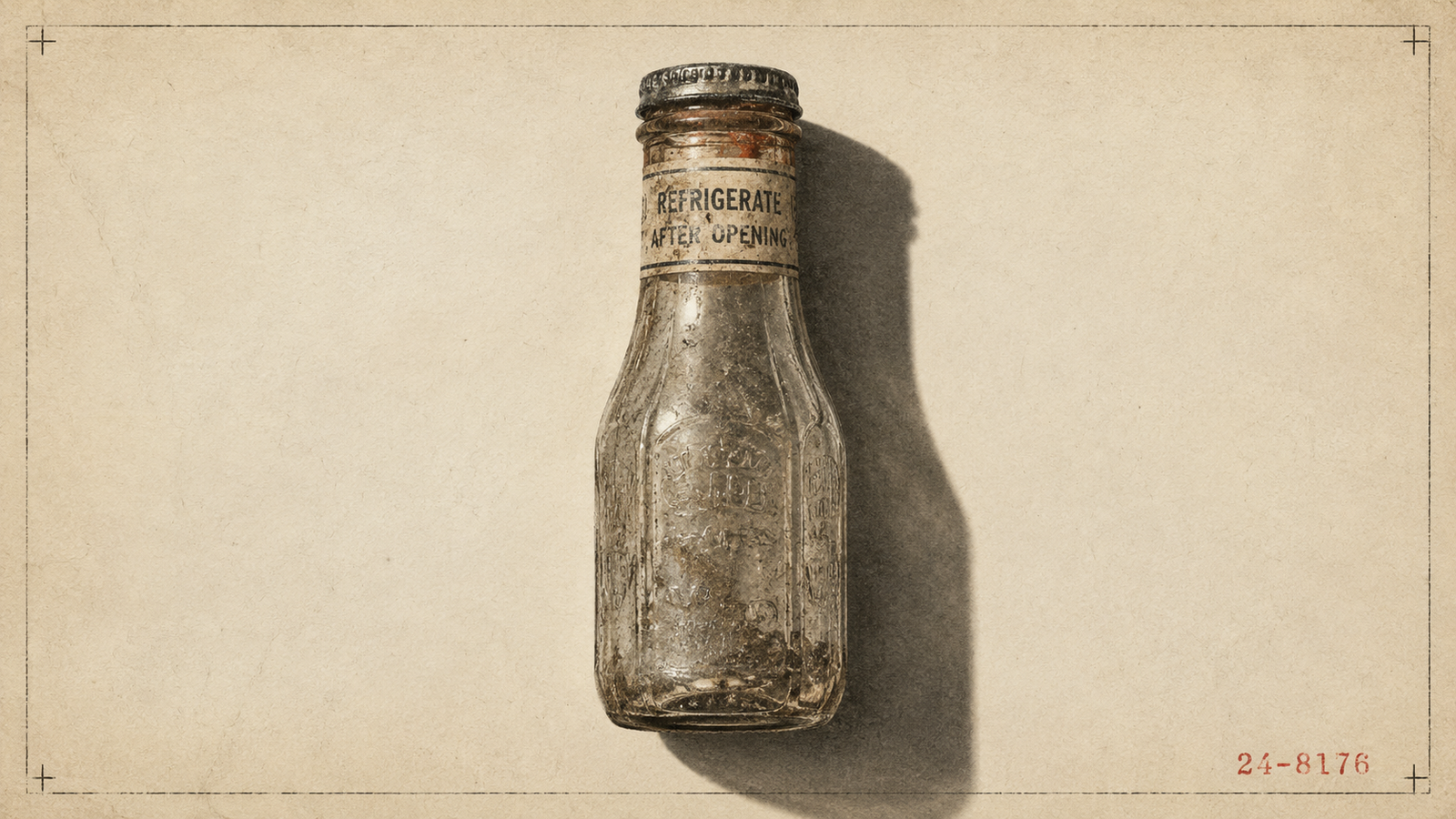
IMPORTANT: Must Be Refrigerated After Opening To Maintain Safety.
The Language
The cleanest documented version of this language doesn't come from a ketchup bottle. It comes from the regulator that tried, and never finished trying, to standardize it. In February 1997, FDA's Center for Food Safety and Applied Nutrition issued a guidance document proposing three model statements for food manufacturers, sorted by category:
"IMPORTANT Must Be Kept Refrigerated To Maintain Safety." — FDA's Group A model statement, for foods hazardous unless kept cold at all times
"IMPORTANT Must Be Refrigerated After Opening To Maintain Safety." — FDA's Group B model statement, for shelf-stable foods that become hazardous once opened, the best-documented direct ancestor of the phrase this article is about
"Refrigerate for Quality." — FDA's Group C model statement, offered only as a suggestion, for foods where refrigeration affects taste and texture but never safety
The words most shoppers actually meet on a ketchup or mustard bottle today are shorter and less specific than FDA's own Group B language: "Refrigerate After Opening," without the "Must Be," the "IMPORTANT," or the safety qualifier.
Plain-English Translation
"Refrigerate after opening" tells a shopper to move a product to the fridge once the seal is broken. On some labels, that's a genuine food-safety instruction. On many others such as most ordinary condiments, per the food-safety sources examined for this piece, it's a suggestion about flavor and shelf life wearing the same words as a hazard warning. No federal regulation requires a general "refrigerate after opening" statement on ordinary shelf-stable condiments: FDA's own affirmative list of mandatory warning and safe-handling label statements does not include them.
Reasoned from that regulatory gap, and from how manufacturers describe their own labels elsewhere (see Myth vs. Reality, below), the phrase's spread across condiment shelves looks like voluntary industry practice rather than legal mandate, an inference this article makes explicit rather than presenting as a directly sourced fact.
Before This Language Existed
Before FDA's 1997 intervention, U.S. food labels mostly carried one undifferentiated instruction, "keep refrigerated," regardless of whether refrigeration mattered for safety or only for quality. FDA's later rationale for the guidance was explicit about the resulting gap: generic "keep refrigerated" wording, the agency wrote, does not distinguish products where refrigeration is safety-critical from products where refrigeration only protects quality.
The two products at the center of the incidents that prompted the guidance were themselves carrying that same generic wording at the time, and nothing about it flagged them as different from an ordinary jar of condiment.